The key points are temporarily unavailable. You can still read the full Story below.
Main Points
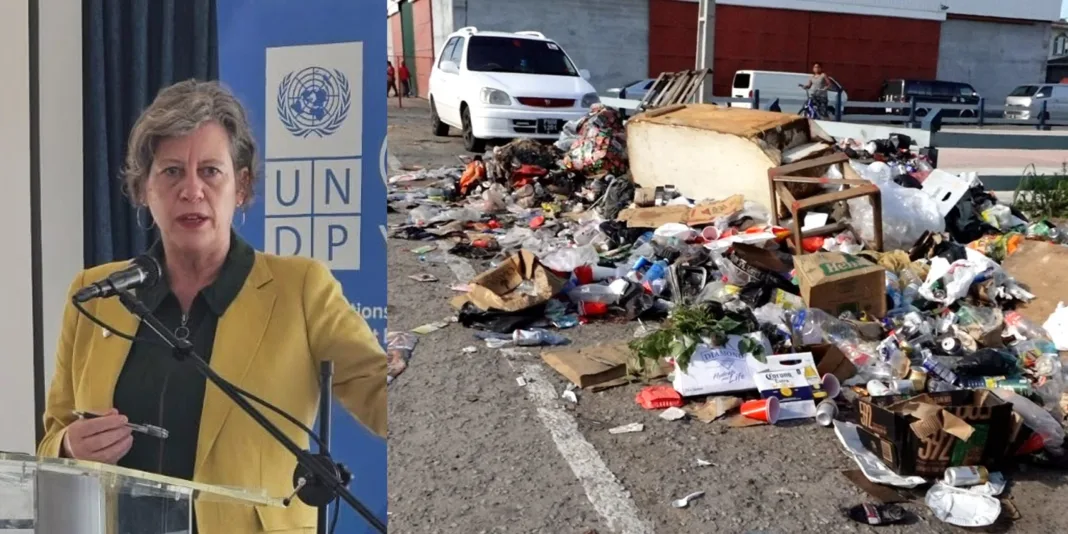
The United Nations Development Programme (UNDP) has expressed the importance of establishing stronger and more coordinated waste management systems in Guyana to tackle future environmental and public health challenges. This statement was made by UNDP Resident Representative Katy Thompson during a workshop aimed at developing a National Solid Waste Management Strategic Plan.Thompson highlighted that waste management is a critical issue that impacts all sectors of society, necessitating a collaborative effort from government agencies, local authorities, businesses, and citizens. She stated, "No matter where we came from across Guyana, the issue on the table affects us both personally and for us in our workloads as well."The workshop convened representatives from various organizations, including the Environmental Protection Agency, the Solid Waste Management Authority, Regional Democratic Councils, Neighbourhood Democratic Councils, municipalities, private sector entities, civil society groups, development partners, and the media. Thompson pointed out that as Guyana's economy expands, changing consumption patterns and industrial growth are increasing demands on existing waste management systems.She remarked, "In a country like Guyana, as in many countries experiencing rapid growth, the development choices we make will have long-term effects." The workshop aims to enhance how Guyana plans, governs, and improves waste management in the future. Thompson emphasized that the initiative goes beyond merely collecting and disposing of waste; it involves creating a system that can adapt to future challenges.Thompson noted that a systemic approach is necessary, which includes regulation, infrastructure, financing, cross-institution coordination, and public participation. A significant aspect of the initiative will focus on improving data collection and usage to inform policymaking and investment decisions. She stated, "We’re going to address issues around data and obtaining data so that we can improve the planning process."Evidence-based planning is considered a fundamental principle of effective governance and is a key aspect of UNDP's support for the initiative. Thompson also acknowledged the vital role of local government bodies, emphasizing their importance in sanitation services and community engagement.The proposed National Solid Waste Management Strategic Plan is expected to complement the Solid Waste Management Bill currently being finalized by the government. Thompson indicated that a comprehensive strategy can help clarify responsibilities, establish budgets, and create a roadmap for addressing waste management challenges nationwide.She encouraged stakeholders to consider innovative solutions involving waste separation, recycling, reuse, recovery, and value creation, promoting a circular economy model. This approach aims to shift the perception of waste from a burden to a resource within the growing economy.The initiative is supported by the Partnership for Action on Green Economy (PAGE), a global program through which the UNDP is assisting Guyana in achieving sustainable development goals. Thompson reaffirmed the UNDP's commitment to collaborating with the Ministry of Local Government and Regional Development and other stakeholders as they work on the national strategy. The workshop is part of ongoing efforts to establish a long-term framework for managing waste in a rapidly developing country. Source: hgptv.com
The United Nations Development Programme (UNDP) has expressed the importance of establishing stronger and more coordinated waste management systems in Guyana to tackle future environmental and public health challenges. This statement was made by UNDP Resident Representative Katy Thompson during a workshop aimed at developing a National Solid Waste Management Strategic Plan.
Thompson highlighted that waste management is a critical issue that impacts all sectors of society, necessitating a collaborative effort from government agencies, local authorities, businesses, and citizens. She stated, “No matter where we came from across Guyana, the issue on the table affects us both personally and for us in our workloads as well.”
The workshop convened representatives from various organizations, including the Environmental Protection Agency, the Solid Waste Management Authority, Regional Democratic Councils, Neighbourhood Democratic Councils, municipalities, private sector entities, civil society groups, development partners, and the media. Thompson pointed out that as Guyana’s economy expands, changing consumption patterns and industrial growth are increasing demands on existing waste management systems.
She remarked, “In a country like Guyana, as in many countries experiencing rapid growth, the development choices we make will have long-term effects.” The workshop aims to enhance how Guyana plans, governs, and improves waste management in the future. Thompson emphasized that the initiative goes beyond merely collecting and disposing of waste; it involves creating a system that can adapt to future challenges.
Thompson noted that a systemic approach is necessary, which includes regulation, infrastructure, financing, cross-institution coordination, and public participation. A significant aspect of the initiative will focus on improving data collection and usage to inform policymaking and investment decisions. She stated, “We’re going to address issues around data and obtaining data so that we can improve the planning process.”
Evidence-based planning is considered a fundamental principle of effective governance and is a key aspect of UNDP’s support for the initiative. Thompson also acknowledged the vital role of local government bodies, emphasizing their importance in sanitation services and community engagement.
The proposed National Solid Waste Management Strategic Plan is expected to complement the Solid Waste Management Bill currently being finalized by the government. Thompson indicated that a comprehensive strategy can help clarify responsibilities, establish budgets, and create a roadmap for addressing waste management challenges nationwide.
She encouraged stakeholders to consider innovative solutions involving waste separation, recycling, reuse, recovery, and value creation, promoting a circular economy model. This approach aims to shift the perception of waste from a burden to a resource within the growing economy.
The initiative is supported by the Partnership for Action on Green Economy (PAGE), a global program through which the UNDP is assisting Guyana in achieving sustainable development goals. Thompson reaffirmed the UNDP’s commitment to collaborating with the Ministry of Local Government and Regional Development and other stakeholders as they work on the national strategy. The workshop is part of ongoing efforts to establish a long-term framework for managing waste in a rapidly developing country.
News Desk is the editorial publishing account for Tringlobe Media News, covering breaking news, public affairs, entertainment, community developments and regional stories across Trinidad and Tobago, the Caribbean and internationally.