The key points are temporarily unavailable. You can still read the full Story below.
Main Points
United Nations Secretary-General António Guterres has issued a warning to governments, including Guyana, and fossil fuel producers regarding the ongoing climate crisis. During a special address at the London Climate Action Week Summit, he stated that coal, oil, and gas are central to the global climate emergency and must be addressed to prevent further environmental and economic challenges.Guterres described the current situation as a "tale of two crises": a climate crisis leading to dangerous temperature increases and an energy crisis revealing the vulnerabilities of economies reliant on fossil fuels. He argued that both crises stem from the same source, stating, "On the surface, these crises may seem separate. But they share the same destructive origin: fossil fuels."He emphasized the need for a "fast, fair transition to clean energy" and increased investment in adaptation, resilience, and climate justice for countries already affected by global warming. A significant portion of his address focused on the oil and gas sector, which he accused of exacerbating the climate crisis while profiting from global instability.Guterres noted that despite ongoing climate negotiations, governments are not acting swiftly enough to reduce emissions from fossil fuel production and consumption. He pointed out that current national climate plans would only achieve a 10 percent reduction in global emissions by 2035, far below the 60 percent reduction needed to maintain the 1.5 degrees Celsius target.He highlighted the urgency of addressing methane emissions, which he described as a greenhouse gas with a significant short-term impact on warming. Guterres stated that methane is responsible for about one-third of global warming and is 80 times more potent than carbon dioxide. He called for immediate action on methane emissions, particularly in the fossil fuel industry, and emphasized that voluntary efforts are insufficient.According to Guterres, the oil and gas sector has the potential for immediate emissions reductions, as much of the necessary technology already exists. He cited findings from the International Energy Agency indicating that approximately 70 percent of methane emissions from oil and gas operations could be eliminated using existing technology, often at low or no cost. However, he noted that the industry continues to waste significant amounts of gas, with 167 billion cubic meters flared in 2025 alone.Guterres proposed establishing a new global standard for the oil and gas industry, advocating for "near-zero methane emissions across the value chain." He urged governments to implement stricter regulations on producers and consumers, moving beyond voluntary commitments. He drew parallels to past successes in phasing out leaded gasoline and ozone-depleting chemicals, asserting that methane pollution should be the next target.Additionally, Guterres criticized calls for expanding oil fields, gas production, and coal development, arguing that these actions would not resolve the crises but rather exacerbate them. He warned that new fossil fuel infrastructure risks becoming stranded as the world transitions to cleaner energy, impacting entire economies that fail to adapt.He also called for taxing the significant profits of fossil fuel companies during times of instability and market disruption, suggesting that the proceeds should support vulnerable households and accelerate the transition to cleaner energy. Guterres highlighted the need to eliminate structural barriers hindering renewable energy projects, such as outdated transmission networks and insufficient storage capacity.Throughout his address, Guterres framed the climate crisis as not only an environmental issue but also a matter of economic survival, energy security, and global justice. He asserted that energy independence cannot rely on fossil fuel dependence, advocating for renewable energy as the foundation for long-term security and resilience. Guterres concluded by urging governments to act urgently to cut emissions, reduce methane, eliminate wasteful flaring, and accelerate the shift away from fossil fuels. Source: hgptv.com
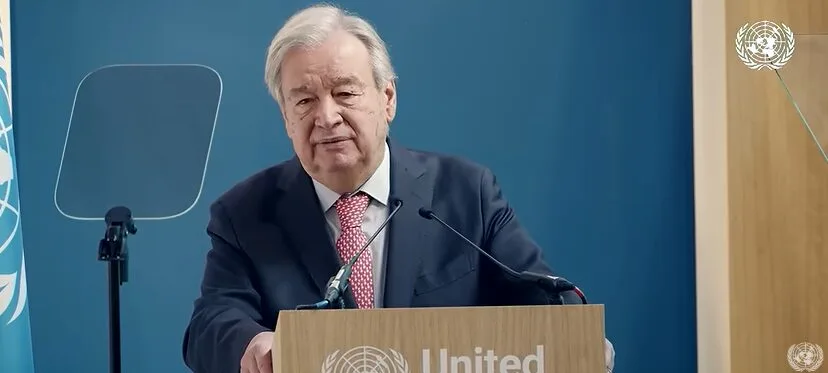
United Nations Secretary-General António Guterres has issued a warning to governments, including Guyana, and fossil fuel producers regarding the ongoing climate crisis. During a special address at the London Climate Action Week Summit, he stated that coal, oil, and gas are central to the global climate emergency and must be addressed to prevent further environmental and economic challenges.
Guterres described the current situation as a “tale of two crises”: a climate crisis leading to dangerous temperature increases and an energy crisis revealing the vulnerabilities of economies reliant on fossil fuels. He argued that both crises stem from the same source, stating, “On the surface, these crises may seem separate. But they share the same destructive origin: fossil fuels.”
He emphasized the need for a “fast, fair transition to clean energy” and increased investment in adaptation, resilience, and climate justice for countries already affected by global warming. A significant portion of his address focused on the oil and gas sector, which he accused of exacerbating the climate crisis while profiting from global instability.
Guterres noted that despite ongoing climate negotiations, governments are not acting swiftly enough to reduce emissions from fossil fuel production and consumption. He pointed out that current national climate plans would only achieve a 10 percent reduction in global emissions by 2035, far below the 60 percent reduction needed to maintain the 1.5 degrees Celsius target.
He highlighted the urgency of addressing methane emissions, which he described as a greenhouse gas with a significant short-term impact on warming. Guterres stated that methane is responsible for about one-third of global warming and is 80 times more potent than carbon dioxide. He called for immediate action on methane emissions, particularly in the fossil fuel industry, and emphasized that voluntary efforts are insufficient.
According to Guterres, the oil and gas sector has the potential for immediate emissions reductions, as much of the necessary technology already exists. He cited findings from the International Energy Agency indicating that approximately 70 percent of methane emissions from oil and gas operations could be eliminated using existing technology, often at low or no cost. However, he noted that the industry continues to waste significant amounts of gas, with 167 billion cubic meters flared in 2025 alone.
Guterres proposed establishing a new global standard for the oil and gas industry, advocating for “near-zero methane emissions across the value chain.” He urged governments to implement stricter regulations on producers and consumers, moving beyond voluntary commitments. He drew parallels to past successes in phasing out leaded gasoline and ozone-depleting chemicals, asserting that methane pollution should be the next target.
Additionally, Guterres criticized calls for expanding oil fields, gas production, and coal development, arguing that these actions would not resolve the crises but rather exacerbate them. He warned that new fossil fuel infrastructure risks becoming stranded as the world transitions to cleaner energy, impacting entire economies that fail to adapt.
He also called for taxing the significant profits of fossil fuel companies during times of instability and market disruption, suggesting that the proceeds should support vulnerable households and accelerate the transition to cleaner energy. Guterres highlighted the need to eliminate structural barriers hindering renewable energy projects, such as outdated transmission networks and insufficient storage capacity.
Throughout his address, Guterres framed the climate crisis as not only an environmental issue but also a matter of economic survival, energy security, and global justice. He asserted that energy independence cannot rely on fossil fuel dependence, advocating for renewable energy as the foundation for long-term security and resilience. Guterres concluded by urging governments to act urgently to cut emissions, reduce methane, eliminate wasteful flaring, and accelerate the shift away from fossil fuels.
News Desk is the editorial publishing account for Tringlobe Media News, covering breaking news, public affairs, entertainment, community developments and regional stories across Trinidad and Tobago, the Caribbean and internationally.