The key points are temporarily unavailable. You can still read the full Story below.
Main Points
The United States has proposed an increase in tariffs on imports from Guyana, potentially raising the rate from 10% to 12.5%. This proposal is based on findings that Guyana imports products made using forced labor, according to Arun Venkataraman, a former head of the US Foreign Commercial Service. Venkataraman spoke at a luncheon organized by the World Trade Centre Georgetown, discussing strategies for Guyanese businesses to navigate the current geopolitical landscape.Venkataraman noted that the proposed tariff increase could adversely affect new categories of exports from Guyana, particularly in agricultural production. He emphasized that while the overall impact on Guyana's exports may be limited due to exemptions for petroleum products and bauxite, the new tariff could suppress emerging industries.The US Trade Representative (USTR) has indicated that the proposed tariff increase follows an investigation into forced labor practices. Guyana is among 60 countries identified as importing goods produced under such conditions, which the USTR claims places American companies at a disadvantage.Ambassador Jamieson Greer stated that the US will not tolerate disparities that arise from trading partners' failure to address forced labor imports. He highlighted that some countries have made commitments to prevent such imports, but more action is needed from all trading partners.The USTR plans to hold hearings regarding these proposed actions on July 7. The investigation's findings suggest that the failure to enforce a prohibition on forced labor imports is unreasonable and burdens US commerce.Venkataraman also discussed the decline in US imports to Guyana, which fell from 28% in 2024 to 17.9% in 2025, potentially due to the new tariff regimes. He advised Guyanese businesses to explore opportunities within and outside Guyana and to leverage relationships with the Guyanese diaspora for business partnerships.He encouraged companies to engage with trade associations and government officials to shape bilateral agreement priorities, particularly in sectors like critical minerals. Venkataraman acknowledged that while the current geopolitical landscape is challenging, there are tools within the US tariff code that can facilitate exports.Looking ahead, he expressed that the changes in global trade dynamics are fundamental and enduring, regardless of future administrations. He also mentioned the potential for the World Trade Organization (WTO) to adapt and survive, emphasizing the importance of consensus in its decision-making processes. Source: demerarawaves.com
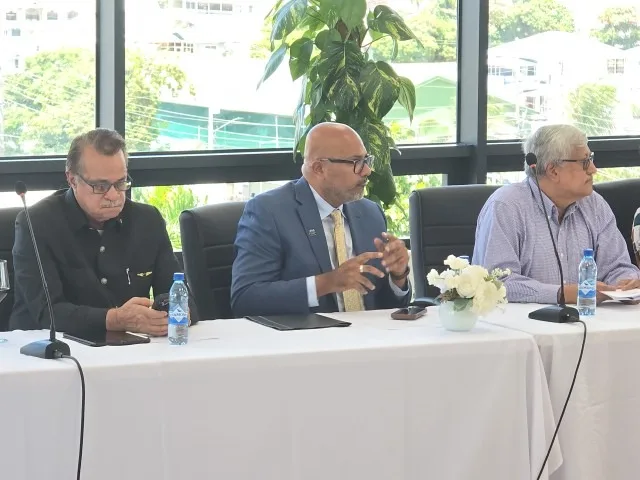
The United States has proposed an increase in tariffs on imports from Guyana, potentially raising the rate from 10% to 12.5%. This proposal is based on findings that Guyana imports products made using forced labor, according to Arun Venkataraman, a former head of the US Foreign Commercial Service. Venkataraman spoke at a luncheon organized by the World Trade Centre Georgetown, discussing strategies for Guyanese businesses to navigate the current geopolitical landscape.
Venkataraman noted that the proposed tariff increase could adversely affect new categories of exports from Guyana, particularly in agricultural production. He emphasized that while the overall impact on Guyana’s exports may be limited due to exemptions for petroleum products and bauxite, the new tariff could suppress emerging industries.
The US Trade Representative (USTR) has indicated that the proposed tariff increase follows an investigation into forced labor practices. Guyana is among 60 countries identified as importing goods produced under such conditions, which the USTR claims places American companies at a disadvantage.
Ambassador Jamieson Greer stated that the US will not tolerate disparities that arise from trading partners’ failure to address forced labor imports. He highlighted that some countries have made commitments to prevent such imports, but more action is needed from all trading partners.
The USTR plans to hold hearings regarding these proposed actions on July 7. The investigation’s findings suggest that the failure to enforce a prohibition on forced labor imports is unreasonable and burdens US commerce.
Venkataraman also discussed the decline in US imports to Guyana, which fell from 28% in 2024 to 17.9% in 2025, potentially due to the new tariff regimes. He advised Guyanese businesses to explore opportunities within and outside Guyana and to leverage relationships with the Guyanese diaspora for business partnerships.
He encouraged companies to engage with trade associations and government officials to shape bilateral agreement priorities, particularly in sectors like critical minerals. Venkataraman acknowledged that while the current geopolitical landscape is challenging, there are tools within the US tariff code that can facilitate exports.
Looking ahead, he expressed that the changes in global trade dynamics are fundamental and enduring, regardless of future administrations. He also mentioned the potential for the World Trade Organization (WTO) to adapt and survive, emphasizing the importance of consensus in its decision-making processes.
News Desk is the editorial publishing account for Tringlobe Media News, covering breaking news, public affairs, entertainment, community developments and regional stories across Trinidad and Tobago, the Caribbean and internationally.