The key points are temporarily unavailable. You can still read the full Story below.
Main Points
Guyana and Trinidad and Tobago have opted not to align with the Caribbean Community (CARICOM) in its recent statement urging the cessation of plans for military action against Cuba. The CARICOM Council for Foreign and Community Relations (COFCOR) emphasized the importance of maintaining the Caribbean as a Zone of Peace and expressed concern over remarks suggesting potential military aggression towards Cuba. COFCOR highlighted that such actions could lead to significant human suffering, economic costs, and destabilization of regional security.This development follows comments made by United States President Donald Trump, who indicated that he might consider military intervention in Cuba, a notion that has been contemplated by previous US administrations. In response, CARICOM's statement noted that both Guyana and Trinidad and Tobago distanced themselves from the collective stance of the foreign ministers, stating, "The Cooperative Republic of Guyana and The Republic of Trinidad and Tobago reserve their positions on the foregoing Statement."President Irfaan Ali of Guyana and Prime Minister Kamla Persad-Bissessar of Trinidad and Tobago were the only CARICOM leaders present at the Shield of the Americas conference in Miami, Florida, in May 2026. During the conference, Dr. Ali expressed the need for change in Cuba, advocating for a transition that would benefit the Cuban populace through improved conditions and democratic governance.Prime Minister Persad-Bissessar also addressed the CARICOM Summit in February, asserting that while they desire democracy and capitalism for themselves, they cannot support a system of governance in Cuba that contradicts these values.Historically, Guyana has been a supporter of Cuba, receiving various forms of assistance, including scholarships and medical personnel. However, recent actions have seen Guyana discontinue the Cuban medical brigade program following US concerns regarding human trafficking.COFCOR has called for the US to lift restrictions preventing Cuba from importing fuel, which has exacerbated the humanitarian crisis on the island. The council condemned the ongoing economic sanctions against Cuba, asserting that these measures violate human rights and hinder the well-being of both Cubans and CARICOM nationals studying in Cuba.COFCOR reiterated that Cuba poses no threat to any nation and is a peaceful member of the international community. The council's position reflects a commitment to uphold international law and solidarity with resolutions supported by a majority of United Nations member states. Source: demerarawaves.com
Guyana and Trinidad and Tobago have opted not to align with the Caribbean Community (CARICOM) in its recent statement urging the cessation of plans for military action against Cuba. The CARICOM Council for Foreign and Community Relations (COFCOR) emphasized the importance of maintaining the Caribbean as a Zone of Peace and expressed concern over remarks suggesting potential military aggression towards Cuba. COFCOR highlighted that such actions could lead to significant human suffering, economic costs, and destabilization of regional security.
This development follows comments made by United States President Donald Trump, who indicated that he might consider military intervention in Cuba, a notion that has been contemplated by previous US administrations. In response, CARICOM’s statement noted that both Guyana and Trinidad and Tobago distanced themselves from the collective stance of the foreign ministers, stating, “The Cooperative Republic of Guyana and The Republic of Trinidad and Tobago reserve their positions on the foregoing Statement.”
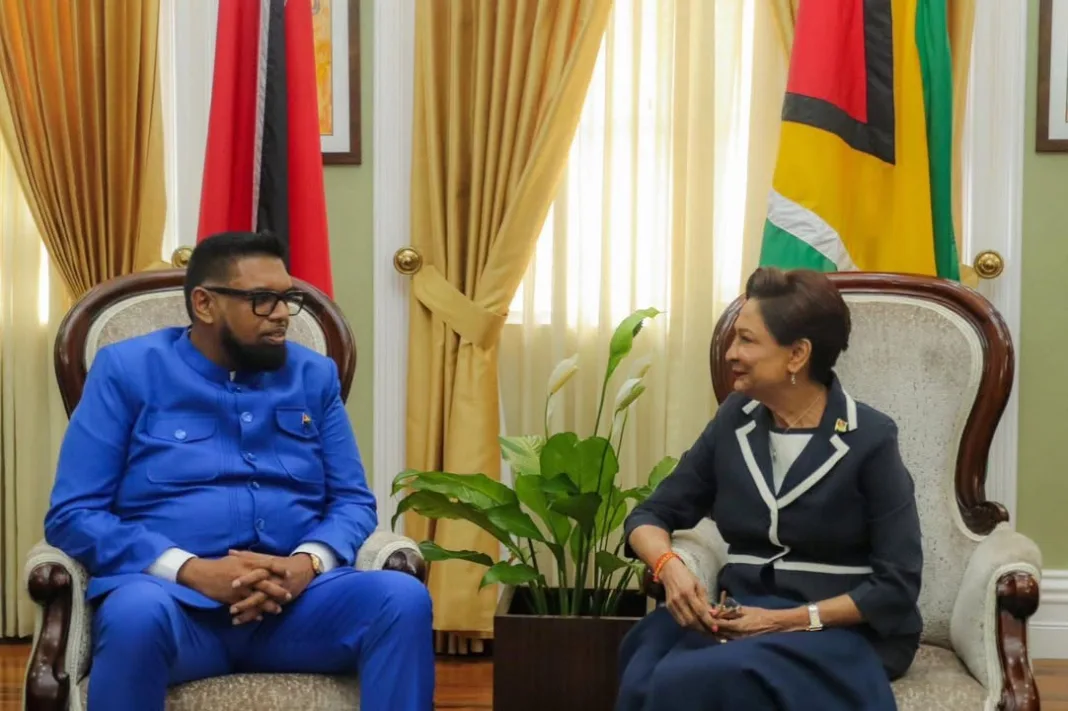
President Irfaan Ali of Guyana and Prime Minister Kamla Persad-Bissessar of Trinidad and Tobago were the only CARICOM leaders present at the Shield of the Americas conference in Miami, Florida, in May 2026. During the conference, Dr. Ali expressed the need for change in Cuba, advocating for a transition that would benefit the Cuban populace through improved conditions and democratic governance.
Prime Minister Persad-Bissessar also addressed the CARICOM Summit in February, asserting that while they desire democracy and capitalism for themselves, they cannot support a system of governance in Cuba that contradicts these values.
Historically, Guyana has been a supporter of Cuba, receiving various forms of assistance, including scholarships and medical personnel. However, recent actions have seen Guyana discontinue the Cuban medical brigade program following US concerns regarding human trafficking.
COFCOR has called for the US to lift restrictions preventing Cuba from importing fuel, which has exacerbated the humanitarian crisis on the island. The council condemned the ongoing economic sanctions against Cuba, asserting that these measures violate human rights and hinder the well-being of both Cubans and CARICOM nationals studying in Cuba.
COFCOR reiterated that Cuba poses no threat to any nation and is a peaceful member of the international community. The council’s position reflects a commitment to uphold international law and solidarity with resolutions supported by a majority of United Nations member states.
News Desk is the editorial publishing account for Tringlobe Media News, covering breaking news, public affairs, entertainment, community developments and regional stories across Trinidad and Tobago, the Caribbean and internationally.