The key points are temporarily unavailable. You can still read the full Story below.
Main Points
President Irfaan Ali of Guyana has made a public appeal to fuel importers and public transport providers, urging them to reduce their profit margins as the country faces rising costs attributed to international conflicts, particularly the ongoing war involving the United States and Iran. This appeal comes amid claims from opposition members that it signifies an acknowledgment of a cost-of-living crisis that the government has previously denied.In a video shared on his official Facebook page, President Ali stated that the Government of Guyana has implemented significant measures to mitigate inflationary pressures in the national market. He emphasized the need for collaboration among the government and stakeholders to address the current international pressures affecting the cost of refined fuel products.The President highlighted that the government had previously eliminated the excise tax on imported refined products, which has resulted in the government absorbing costs that would otherwise be borne by consumers, including hire car operators, speedboat operators, and private car owners. He noted that this decision has cost the government over 100 billion Guyana dollars annually.Ali's appeal suggests that, having already forgone substantial tax revenue, private entities in the fuel and transport sectors should also contribute to alleviating cost-of-living pressures by accepting lower profit margins instead of passing the full burden of international price increases onto consumers.The international context of this situation is linked to the conflict that began on February 28, 2026, when the United States and Israel targeted locations in Iran, leading to a surge in global crude oil prices as Iran restricted shipping through the Strait of Hormuz. This has resulted in rising fuel prices worldwide, with diesel prices increasing more rapidly than gasoline in many markets.In response, opposition member Vincenroy Jordan stated that the President's appeal confirms the existence of a cost-of-living crisis in Guyana, which the government has been reluctant to acknowledge. He criticized the government's economic model, claiming it fails to protect citizens from price pressures and that the administration has not implemented effective price-control mechanisms.Jordan argued that the government's admission of a crisis lacks accompanying policy measures to address it, suggesting that the administration has not effectively managed the cost of living over time. He pointed out that while large corporations benefit from tax breaks, ordinary citizens are left to deal with rising prices.The debate between the President's appeal and the opposition's response highlights a significant policy disagreement regarding the causes of the current cost-of-living challenges. The President's perspective attributes the crisis primarily to international price shocks, while the opposition contends that the government's regulatory framework has long been inadequate to manage prices, exposing systemic issues rather than merely responding to external events.At the time of publication, regulatory bodies such as the Consumer Affairs Bureau and the Competition and Consumer Affairs Commission had not issued statements regarding the regulatory framework for transport fare and fuel pricing. Source: hgptv.com
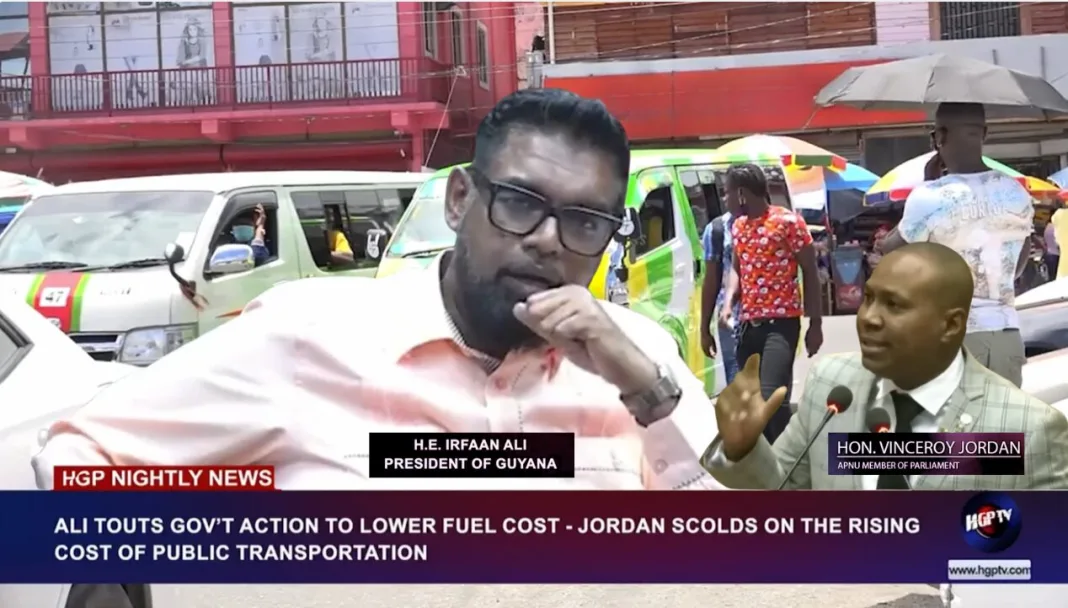
President Irfaan Ali of Guyana has made a public appeal to fuel importers and public transport providers, urging them to reduce their profit margins as the country faces rising costs attributed to international conflicts, particularly the ongoing war involving the United States and Iran. This appeal comes amid claims from opposition members that it signifies an acknowledgment of a cost-of-living crisis that the government has previously denied.
In a video shared on his official Facebook page, President Ali stated that the Government of Guyana has implemented significant measures to mitigate inflationary pressures in the national market. He emphasized the need for collaboration among the government and stakeholders to address the current international pressures affecting the cost of refined fuel products.
The President highlighted that the government had previously eliminated the excise tax on imported refined products, which has resulted in the government absorbing costs that would otherwise be borne by consumers, including hire car operators, speedboat operators, and private car owners. He noted that this decision has cost the government over 100 billion Guyana dollars annually.
Ali’s appeal suggests that, having already forgone substantial tax revenue, private entities in the fuel and transport sectors should also contribute to alleviating cost-of-living pressures by accepting lower profit margins instead of passing the full burden of international price increases onto consumers.
The international context of this situation is linked to the conflict that began on February 28, 2026, when the United States and Israel targeted locations in Iran, leading to a surge in global crude oil prices as Iran restricted shipping through the Strait of Hormuz. This has resulted in rising fuel prices worldwide, with diesel prices increasing more rapidly than gasoline in many markets.
In response, opposition member Vincenroy Jordan stated that the President’s appeal confirms the existence of a cost-of-living crisis in Guyana, which the government has been reluctant to acknowledge. He criticized the government’s economic model, claiming it fails to protect citizens from price pressures and that the administration has not implemented effective price-control mechanisms.
Jordan argued that the government’s admission of a crisis lacks accompanying policy measures to address it, suggesting that the administration has not effectively managed the cost of living over time. He pointed out that while large corporations benefit from tax breaks, ordinary citizens are left to deal with rising prices.
The debate between the President’s appeal and the opposition’s response highlights a significant policy disagreement regarding the causes of the current cost-of-living challenges. The President’s perspective attributes the crisis primarily to international price shocks, while the opposition contends that the government’s regulatory framework has long been inadequate to manage prices, exposing systemic issues rather than merely responding to external events.
At the time of publication, regulatory bodies such as the Consumer Affairs Bureau and the Competition and Consumer Affairs Commission had not issued statements regarding the regulatory framework for transport fare and fuel pricing.
News Desk is the editorial publishing account for Tringlobe Media News, covering breaking news, public affairs, entertainment, community developments and regional stories across Trinidad and Tobago, the Caribbean and internationally.