This report covers trinidad tobago: us planning with key details and context.
This report covers trinidad tobago: us planning with key details and context.
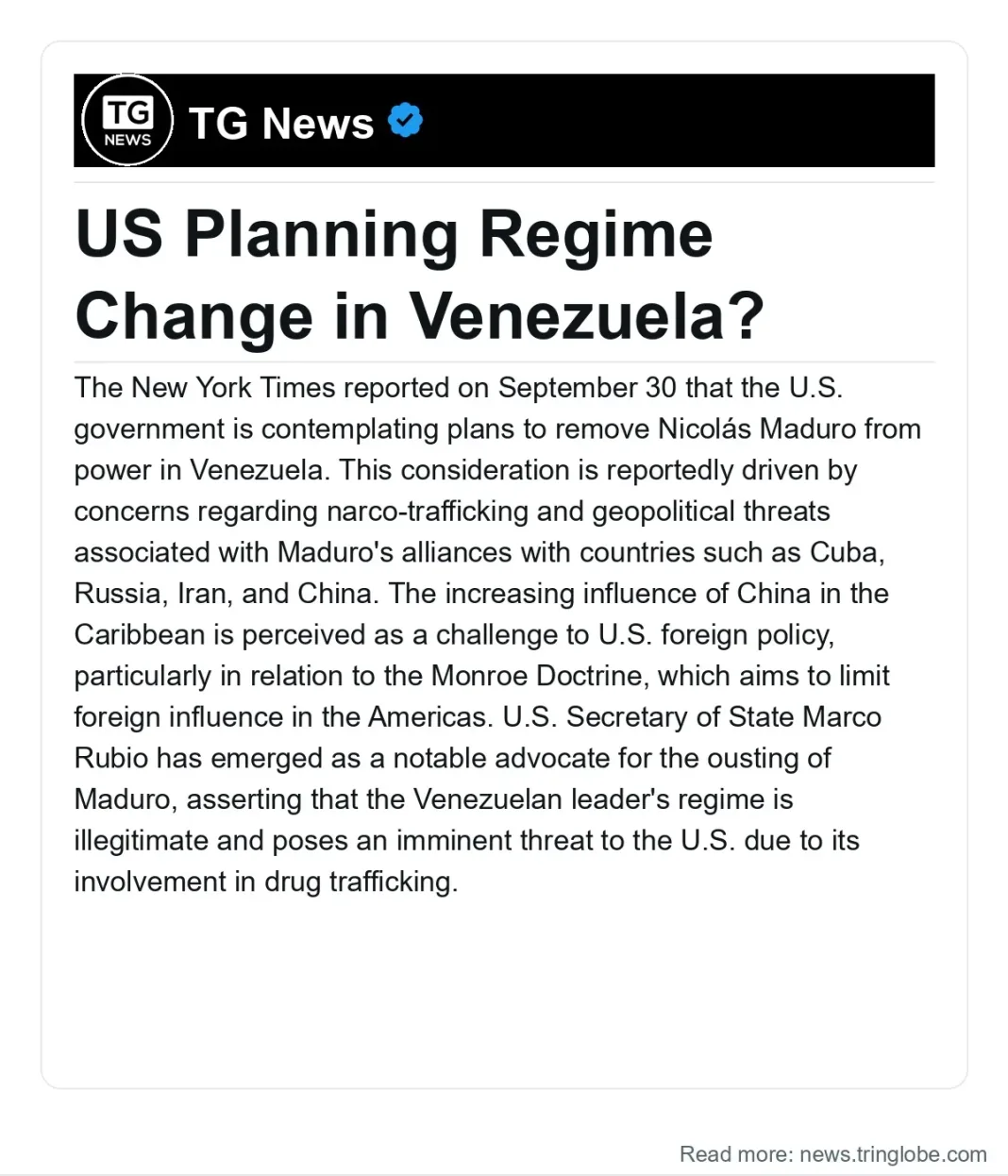
The New York Times reported on September 30 that the U.S. government is contemplating plans to remove Nicolás Maduro from power in Venezuela. This consideration is reportedly driven by concerns regarding narco-trafficking and geopolitical threats associated with Maduro’s alliances with countries such as Cuba, Russia, Iran, and China. The increasing influence of China in the Caribbean is perceived as a challenge to U.S. foreign policy, particularly in relation to the Monroe Doctrine, which aims to limit foreign influence in the Americas.
U.S. Secretary of State Marco Rubio has emerged as a notable advocate for the ousting of Maduro, asserting that the Venezuelan leader’s regime is illegitimate and poses an imminent threat to the U.S. due to its involvement in drug trafficking. In 2020, the Justice Department indicted Maduro and several other officials on drug trafficking charges, with Rubio labeling Maduro a “fugitive from American justice.” This situation has led to an increased U.S. military presence in the region, with troop numbers reportedly rising from 4,500 to 6,500, alongside the deployment of significant military assets.
trinidad tobago: us planning: key developments so far.
While the U.S. is exploring various options to remove Maduro without resorting to military intervention, it has acknowledged that military action remains a possibility. The potential removal of Maduro could result in increased oil production in Venezuela, which may benefit both the country and international oil companies. However, neighboring countries such as Trinidad and Tobago and Guyana are reportedly unprepared for the possible influx of refugees that could arise from a regime change in Venezuela.
Concerns about the humanitarian implications of such a change are significant, as the region grapples with the potential consequences of a shift in power dynamics. The situation remains fluid, and the U.S. government’s plans are still in the consideration phase, with various factors influencing the decision-making process.
In summary, the U.S. government’s contemplation of regime change in Venezuela is rooted in a complex interplay of geopolitical interests, concerns over drug trafficking, and the implications of foreign alliances. The potential outcomes of such a move are being weighed carefully, particularly in light of the humanitarian challenges that may arise for neighboring countries.
As the situation develops, it will be important to monitor the responses from both the U.S. government and the international community regarding the future of Venezuela and its leadership. The implications of any actions taken could have far-reaching effects on regional stability and international relations.