This report covers trinidad tobago: price fiscal with key details and context.
This report covers trinidad tobago: price fiscal with key details and context.
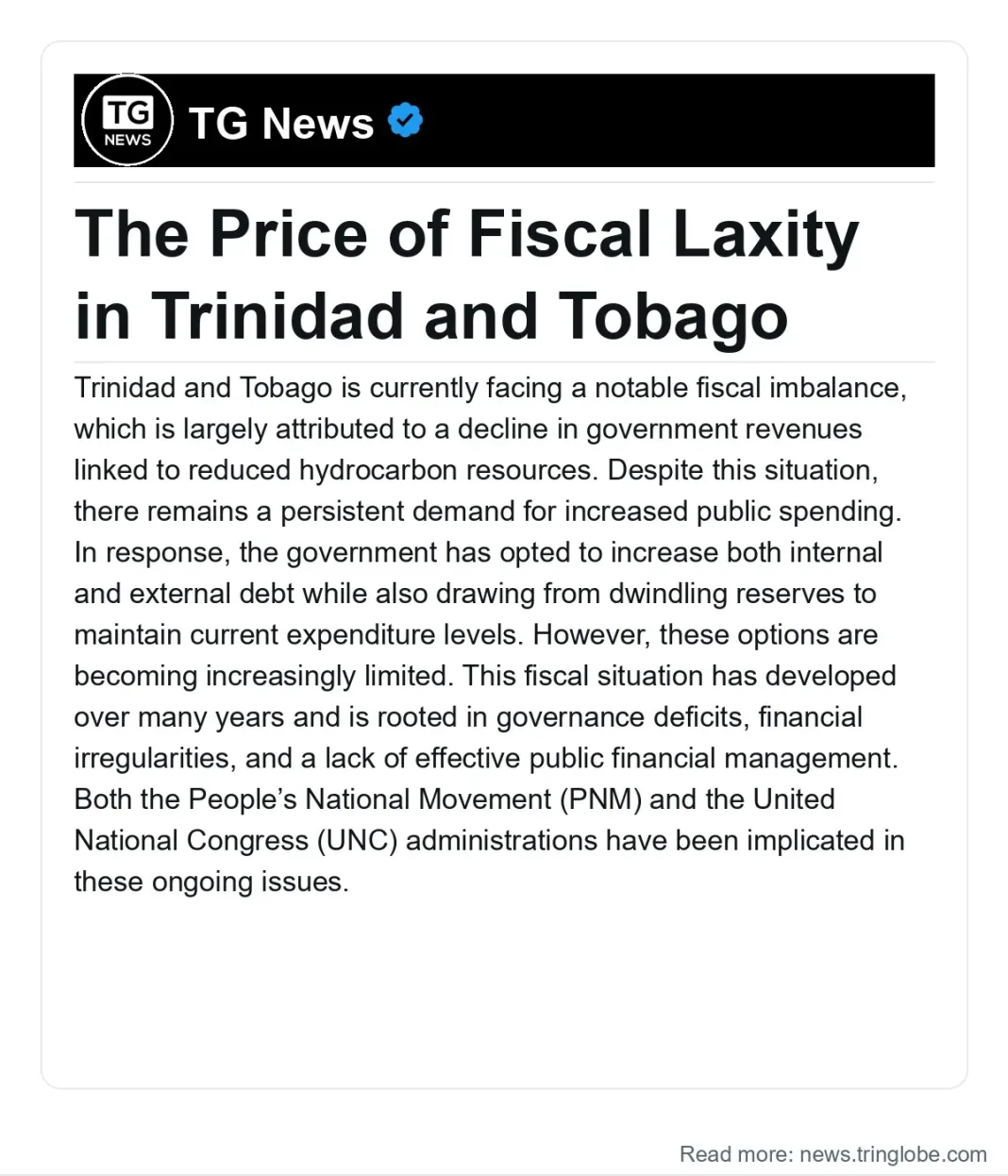
Trinidad and Tobago is currently facing a notable fiscal imbalance, which is largely attributed to a decline in government revenues linked to reduced hydrocarbon resources. Despite this situation, there remains a persistent demand for increased public spending. In response, the government has opted to increase both internal and external debt while also drawing from dwindling reserves to maintain current expenditure levels. However, these options are becoming increasingly limited.
This fiscal situation has developed over many years and is rooted in governance deficits, financial irregularities, and a lack of effective public financial management. Both the People’s National Movement (PNM) and the United National Congress (UNC) administrations have been implicated in these ongoing issues. Historical governance failures have highlighted a pattern of inadequate decision-making and a lack of accountability in the management of public funds.
Over the decades, Trinidad and Tobago has received substantial public revenues, including benefits from three significant energy windfalls. However, the government has forfeited considerable revenue due to non-compliance with taxation obligations among local individuals and businesses. Additionally, flawed contracts with foreign entities for resource exploitation and questionable asset sales have deprived the Treasury of billions of dollars.
trinidad tobago: price fiscal: key developments so far.
The country has also experienced reckless spending patterns that have rapidly depleted fiscal balances. There has been a notable lack of proper project screening, transparency, and oversight, which has led to mismanagement and corruption. The cumulative effect of these issues has resulted in substantial financial losses for the country.
The ongoing fiscal challenges raise important questions about the management of public finances and whether there exists a cultural deficiency in fiscal responsibility. Comparisons have been made to Norway, which has successfully managed its oil wealth through a Sovereign Wealth Fund. This stands in stark contrast to Trinidad and Tobago’s Heritage and Stabilisation Fund, which has not achieved similar success.
As the government navigates these fiscal challenges, it faces the difficult task of balancing public demand for services with the realities of declining revenues and increasing debt. The need for comprehensive reforms in public financial management and governance practices is becoming increasingly urgent. Stakeholders are calling for a reevaluation of fiscal policies and a commitment to greater accountability and transparency in the management of public resources.
In conclusion, Trinidad and Tobago’s fiscal situation serves as a reminder of the complexities involved in managing public finances, especially in resource-rich nations. The lessons learned from past governance failures and the need for a more disciplined approach to fiscal management are critical for the country’s economic future.