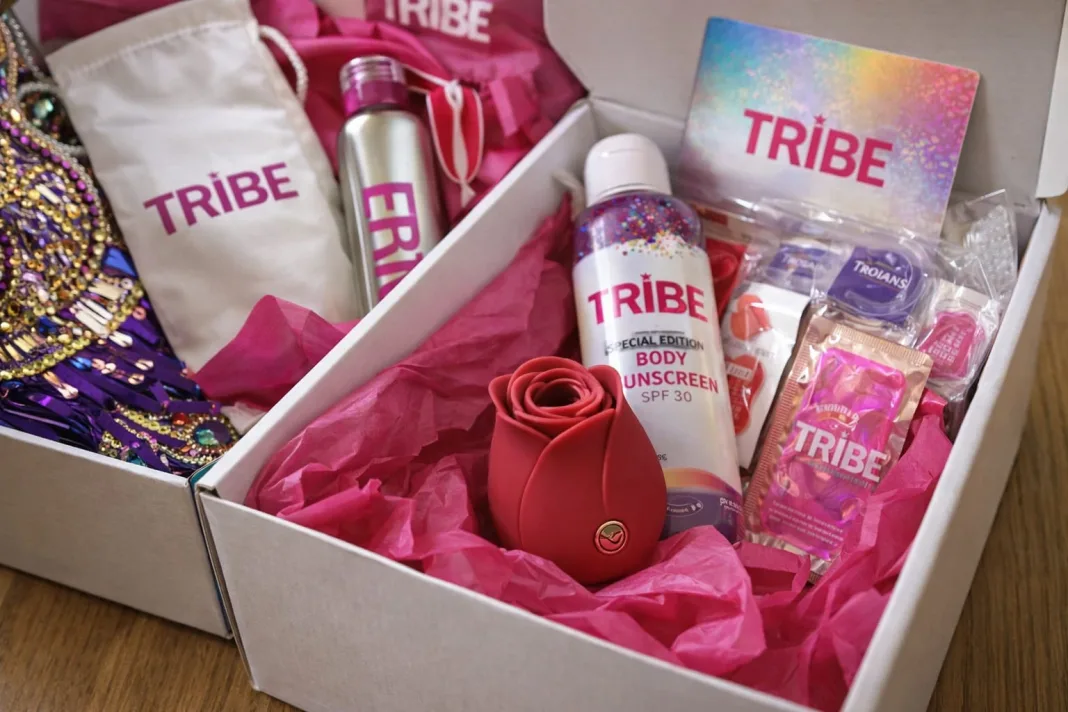
A Carnival promotion by Tribe has sparked one of the season’s most talked-about debates, not because of the item itself, but because of what it represents.
The band recently confirmed that women masqueraders would receive an adult pleasure device in their goodie bags, packaged as a Valentine-themed “rose” gift. Within hours, screenshots and reactions flooded social media, turning what may have been intended as playful branding into a national conversation about Carnival, sexuality, and cultural direction.
While some dismissed it as a simple marketing gimmick, others see it as a symbol of how Carnival branding continues to evolve and, for some, drift.
The strongest reactions online show a country split across familiar lines. One side argues that Carnival has always been a space of freedom, expression, and sensuality. From revealing costumes to wining on the road, they say sexuality has long been part of the festival’s DNA. For them, the outrage is exaggerated. Adult masqueraders paid thousands for packages, and what they receive in their bags is their choice to use or ignore.
Another group sees the move differently. Their concern is not about adults making personal choices, but about the increasing commercialization and hyper-sexualization of Carnival branding. They argue that while Carnival has always had sensual elements, there is a difference between expression and marketing tactics that lean heavily into shock value for attention.
In that sense, the debate goes far beyond a single item in a bag. It touches on deeper questions. What is Carnival becoming? Who is it for? And how far should bands go in the race to stand out in a competitive, high-cost mas environment?
Some observers point out that this is not the first time goodie bags have included items tied to sexuality. Condoms, for example, have been standard in many packages for years, often framed as promoting safe practices. Supporters of the latest move say the current reaction is less about the object itself and more about discomfort with open conversations around female sexual autonomy.
Others counter that the issue is not morality but messaging. They question whether marketing strategies that lean heavily into sexual themes reinforce stereotypes about Carnival and about Caribbean women, particularly in an era when the festival is increasingly consumed online by global audiences.
There is also a marketing reality at play. Carnival bands operate in an intensely competitive space where visibility and virality matter. In an environment where packages cost thousands and social media drives registration, bold promotional tactics can quickly dominate public conversation. Whether people approve or disapprove, they are talking. From a branding perspective, that attention has value.
Still, some masqueraders say the more practical concern is choice. They suggest that goodie bags could offer options rather than a single standardized gift, allowing participants to select items that better suit their preferences. That argument reflects a broader shift in Carnival consumer culture, where masqueraders increasingly expect customization and personal agency in their experience.
At its core, the controversy reveals a tension that has existed for years. Carnival is simultaneously a cultural tradition, a global brand, a business, and a space for personal expression. Each year, those elements collide in new ways.
The reaction to Tribe’s promotion shows that while Carnival continues to evolve, the conversation about its identity remains very much alive. For some, the move represents freedom and modern expression. For others, it signals a further step toward commercialization and spectacle.
Either way, the moment has forced a wider discussion about what Carnival represents today and what it may represent tomorrow.
Follow us on Instagram: @news.tringlobe