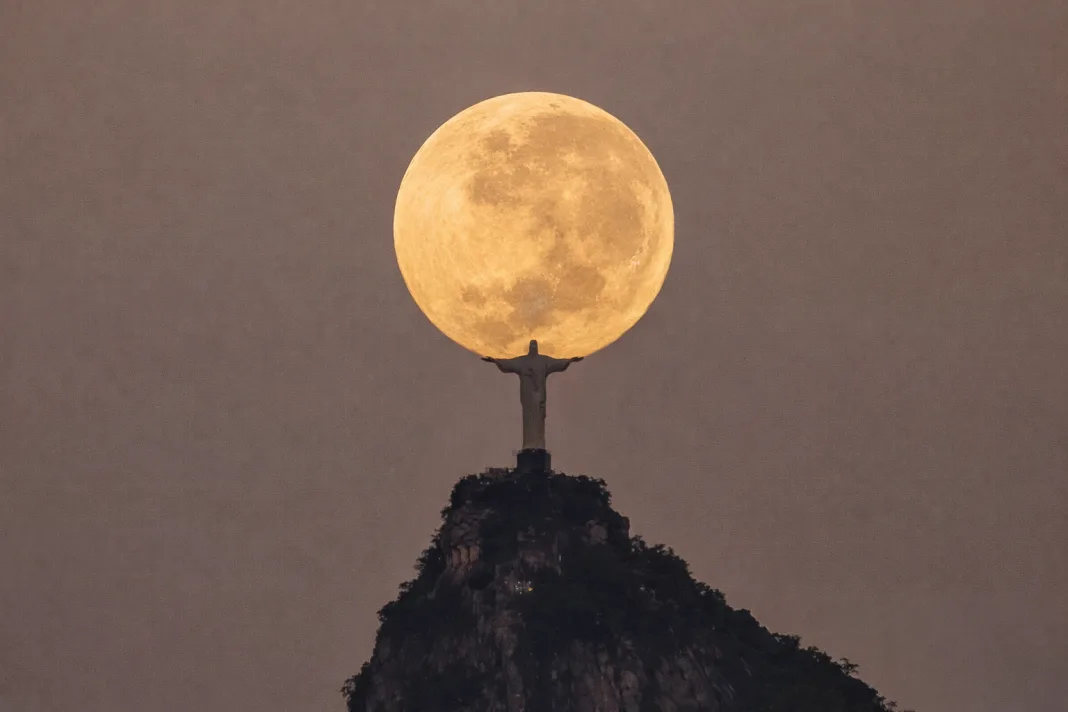
A stunning photograph showing the iconic Christ the Redeemer appearing to “hold” the moon has captured global attention, leaving viewers both amazed and curious about how such a moment was achieved.
The image was taken by Brazilian photographer Leonardo Sens, who spent approximately three years planning and attempting to capture the perfect alignment. The final shot shows the full moon positioned directly behind the statue’s outstretched arms, creating a powerful visual illusion that makes it appear as though the monument is holding the glowing orb.
While many initially questioned whether the image was digitally manipulated, it is in fact a real photograph made possible through careful preparation and timing. Achieving this effect required detailed study of the moon’s movement and positioning, ensuring that the alignment would occur at just the right moment from a precise location.
Capturing the image was far from simple. Sens had to contend with multiple failed attempts due to cloud cover, haze, and slight miscalculations in positioning. Even when conditions seemed ideal, the moon’s rapid movement across the sky meant there were only seconds to get the shot right.
A powerful telephoto lens was used to create the dramatic effect, making the moon appear significantly larger and closer to the statue than it would to the naked eye. This technique, known as compression, enhances the illusion and gives the photograph its striking visual impact.
After years of persistence, Sens finally succeeded when all elements aligned perfectly. The resulting image has since gone viral, with many praising the dedication and precision required to capture such a rare moment.
Beyond its visual appeal, the photograph serves as a reminder of the patience and planning often required behind some of the world’s most remarkable images. What appears to be a simple moment is, in reality, the result of careful calculation, persistence, and a deep understanding of both photography and nature.
Follow us on Instagram: @news.tringlobe