Government Considers Mandatory ID Requirement to Enforce Higher Legal Age Limits
The Government is considering making it mandatory for all citizens to carry some form of identification at all times, as part of efforts to enforce proposed changes to laws governing alcohol consumption, marijuana use and gambling.
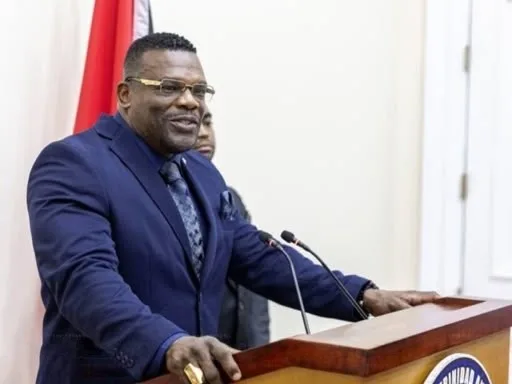
Homeland Security Minister Roger Alexander said on July 10 that responsibility for enforcing the proposed laws would fall to the police. The Prime Minister has proposed increasing the legal drinking age from 18 to 21, and raising the legal age for smoking marijuana and gambling from 18 to 25.
Alexander said the Prime Minister informed him of the proposal before she announced it at a political meeting in Penal on July 7. He explained that requiring citizens to carry identification would assist police officers in verifying a person’s age and address.
“If you tell me you are 16 years old, I could say I’m 40 years old, but I am 17,” Alexander said. “So some people, more so, must walk with some form of ID so police can ascertain your age and your address. It’s something we are looking to address.”
He said the proposed laws would make it easier to identify minors who consume alcohol, noting that the Attorney General was already holding discussions on the matter.
Alexander was speaking to the media after attending the 49th Caricom Heads of Government meeting in Jamaica, where regional leaders discussed crime, security and social issues.
“Our discussions included gangs, murders and violence against women, among other things,” he said. “Some matters I would not divulge because they concern national security. But we came up with solutions to crime.”
He said the meeting also addressed economics, security, effective policing, swift justice and crime prevention through social development and rehabilitation programmes. According to Alexander, some initiatives were not new but had been rebranded, while others had previously been abandoned due to what he described as a lack of vision by the former PNM administration.
“We will reintroduce them, but it will come at a cost, because what could have been done four years ago is more costly to do now,” he said.
One such initiative, he noted, involves equipping police vehicles with modern technology that allows officers to access information in real time.
“Technology is the way to go,” Alexander said. “While my colleagues were speaking about climate change, we were speaking about crime change in the region.”
He pointed to Jamaica as an example of how technology can enhance crime fighting, saying it has some of the best systems in the region. He added that technology helps law enforcement better understand gang activity and its impact on communities.
Alexander also highlighted challenges facing the Trinidad and Tobago Police Service, noting that while the country’s population has increased due to legal and illegal migration, the size and strength of the police service have not grown accordingly.
To achieve the desired impact on crime, he said police officers must be visible and empowered to challenge individuals. He also announced plans to strengthen collaboration between the police service and the Defence Force, as well as intentions to join the Regional Security System based in Barbados.
As line minister, Alexander said his role is to ensure the police have the technical, manpower and vehicular resources needed to fight crime effectively.
“If the police control the streets, the police can control crime,” he said.
He also said the National Operations Centre was underutilised and would be revitalised, with better integration between the joint command, the police command centre and divisional command centres.
Technology, he stressed, must be fully embedded in modern policing, including the use of body cameras and advanced equipment in police vehicles.
“The day will come when police stations will no longer rely on books,” he said. “Officers should not be walking out with desk diaries. Those days are gone. We now have to fix