The key points are temporarily unavailable. You can still read the full Story below.
Main Points
During the first half of each year, attention typically turns to reservoir levels as an indicator of how the dry season may affect national water supplies. Despite limited heavy rainfall in Trinidad over the past four weeks, the country’s reservoirs remain in a strong position ahead of the 2026 dry season, according to the Water and Sewerage Authority of Trinidad and Tobago (WASA).
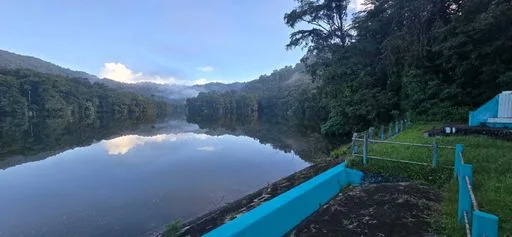
As of January 5, the Navet, Arena and Hollis reservoirs stood at 96.54 per cent, 99.46 per cent and 94.55 per cent capacity, respectively. These levels are near or above their long-term averages, providing reassurance as the traditional dry period approaches.
In Tobago, rainfall conditions were even more favourable at the end of 2025. Several wet days during December allowed the island to record above-average rainfall for the month, pushing the Hillsborough reservoir to an almost full 99.9 per cent capacity.
Despite the recent stretch of drier weather, the Trinidad and Tobago Meteorological Service (TTMS) has not yet declared the onset of the dry season. The country is currently in a transitional phase, with some dry-season atmospheric features present and others still developing.
TTMS noted that strong westerly upper-level winds, reduced rainfall, and the southward migration of the Inter-Tropical Convergence Zone (ITCZ) have already been observed. However, the high-pressure system—formally known as the North Atlantic Sub-Tropical High—has not yet completed its southward shift. Once established, this system typically brings stronger surface winds and occasional rough seas.
The Meteorological Service has already issued its seasonal forecast, predicting wetter-than-usual conditions during the first half of the 2026 dry season. Seasonal rainfall is projected to range between 84 per cent and 124 per cent of the long-term average, with only about 97 dry days expected—below the seasonal norm.
Temperatures are also forecast to remain above average, although residents may experience a few cooler nights in January and February, with minimum temperatures dipping below 20°C.
According to TTMS, the expected combination of rainfall and warmth should further support reservoir levels and groundwater recharge. However, these same conditions may also increase mosquito breeding, heightening the risk of vector-borne diseases.
While the wetter start to the season is likely to suppress bush and landfill fires initially, fire risk is expected to increase during the latter half of the dry season as conditions gradually return to normal dryness. Overall, the outlook points to a shorter and less intense dry season than typically experienced, offering cautious optimism for water security in 2026.