The key points are temporarily unavailable. You can still read the full Story below.
Main Points
Retired Lieutenant Commander Norman Dindial, former director of the National Coastal Surveillance Radar Centre, has reiterated that the radar system installed in Tobago was primarily designed for use in conflict situations and focused on air defence targets, not maritime surveillance. Speaking with the Express yesterday, Dindial said he agreed with assessments that the radar is not intended to detect maritime targets. He described the Trinidad and Tobago Police Service’s (TTPS) announced seizure linked to the radar as “political propaganda” aimed at justifying the system’s installation in Tobago. According to Dindial, while the radar may occasionally detect objects over the sea due to its orientation, it was never designed to monitor maritime traffic. “It is not designed for maritime traffic, not at all. That radar is not designed at all for maritime traffic. It may be able to pick up something because of its orientation, but it is not designed for it. That is political propaganda, and as far as that, an independent State organisation is being used by the politicians for propaganda to defend a US military radar in our territory,” he said. Dindial also criticised claims attributed to the Commissioner of Police, arguing that credit should not be given to a system for capabilities it does not possess. “If the Commissioner knows better, he is not supposed to give credit to a radar that can’t do what he says it did. It is like the TTPS and TTDF can give first aid and triage, but they have been given equipment here to do brain surgery,” he said. He further warned that the radar’s presence in Trinidad and Tobago has made the country a legitimate target, as the system is considered highly valuable and vulnerable without adequate defence. “We do not have the tools that come with the radar. We do not have a missile system; we do not have anything to intercept something incoming. We can see, but we do not have bullets. You can see the targets coming at you, but you do not have the gun or bullets to stop them,” Dindial said. The retired naval officer said that, in his view, the radar was introduced in a manner that could later be used to justify the need for United States assistance to defend it, potentially leading to a stronger US military presence in Trinidad and Tobago. He maintained that without a corresponding defence or interception capability, the radar system offers limited practical security value and instead exposes the country to greater strategic risk.
Retired Lieutenant Commander Norman Dindial, former director of the National Coastal Surveillance Radar Centre, has reiterated that the radar system installed in Tobago was primarily designed for use in conflict situations and focused on air defence targets, not maritime surveillance.
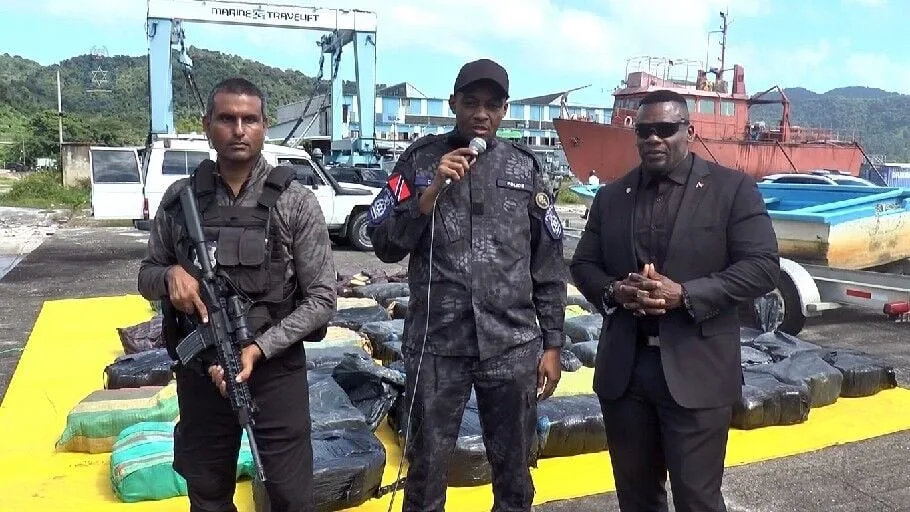
Speaking with the Express yesterday, Dindial said he agreed with assessments that the radar is not intended to detect maritime targets. He described the Trinidad and Tobago Police Service’s (TTPS) announced seizure linked to the radar as “political propaganda” aimed at justifying the system’s installation in Tobago.
According to Dindial, while the radar may occasionally detect objects over the sea due to its orientation, it was never designed to monitor maritime traffic.
“It is not designed for maritime traffic, not at all. That radar is not designed at all for maritime traffic. It may be able to pick up something because of its orientation, but it is not designed for it. That is political propaganda, and as far as that, an independent State organisation is being used by the politicians for propaganda to defend a US military radar in our territory,” he said.
Dindial also criticised claims attributed to the Commissioner of Police, arguing that credit should not be given to a system for capabilities it does not possess.
“If the Commissioner knows better, he is not supposed to give credit to a radar that can’t do what he says it did. It is like the TTPS and TTDF can give first aid and triage, but they have been given equipment here to do brain surgery,” he said.
He further warned that the radar’s presence in Trinidad and Tobago has made the country a legitimate target, as the system is considered highly valuable and vulnerable without adequate defence.
“We do not have the tools that come with the radar. We do not have a missile system; we do not have anything to intercept something incoming. We can see, but we do not have bullets. You can see the targets coming at you, but you do not have the gun or bullets to stop them,” Dindial said.
The retired naval officer said that, in his view, the radar was introduced in a manner that could later be used to justify the need for United States assistance to defend it, potentially leading to a stronger US military presence in Trinidad and Tobago.
He maintained that without a corresponding defence or interception capability, the radar system offers limited practical security value and instead exposes the country to greater strategic risk.
News Desk is the editorial publishing account for Tringlobe Media News, covering breaking news, public affairs, entertainment, community developments and regional stories across Trinidad and Tobago, the Caribbean and internationally.