The key points are temporarily unavailable. You can still read the full Story below.
Main Points
This report covers haiti: haiti steps into with key details and context.
This report covers haiti: haiti steps into with key details and context.
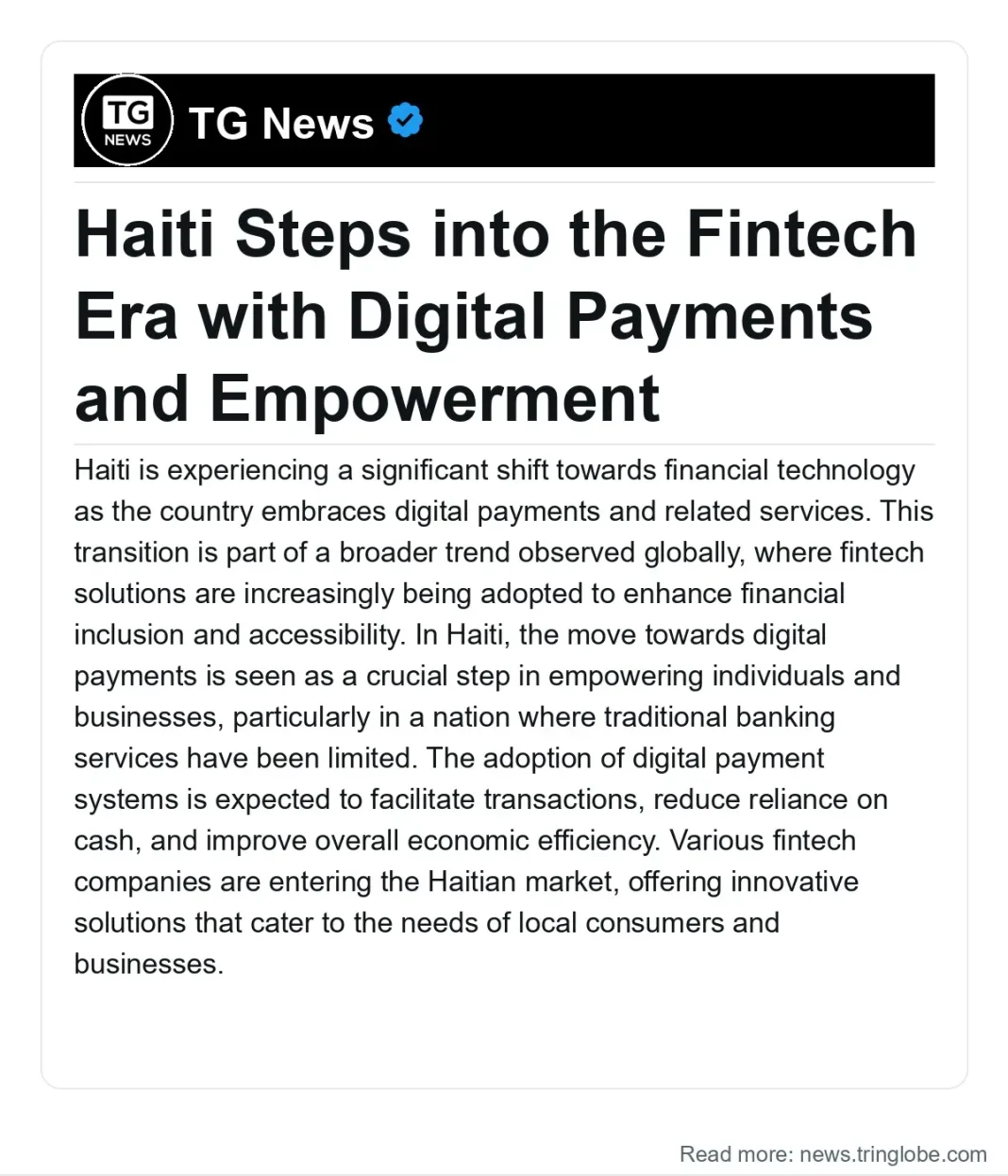
Haiti is experiencing a significant shift towards financial technology as the country embraces digital payments and related services. This transition is part of a broader trend observed globally, where fintech solutions are increasingly being adopted to enhance financial inclusion and accessibility.
In Haiti, the move towards digital payments is seen as a crucial step in empowering individuals and businesses, particularly in a nation where traditional banking services have been limited. The adoption of digital payment systems is expected to facilitate transactions, reduce reliance on cash, and improve overall economic efficiency.
Various fintech companies are entering the Haitian market, offering innovative solutions that cater to the needs of local consumers and businesses. These services include:
- Mobile money platforms
- Online banking
- Digital wallets
These services aim to provide secure and convenient financial transactions. Government officials and industry leaders have expressed optimism about the potential of fintech to drive economic growth and improve the quality of life for many Haitians.
haiti: haiti steps into: key developments so far.
By leveraging technology, the country hopes to overcome some of the challenges posed by its existing financial infrastructure. The introduction of digital payment systems is anticipated to enhance the efficiency of financial transactions, making it easier for individuals and businesses to manage their finances.
As the fintech landscape in Haiti continues to evolve, stakeholders are focusing on creating an environment that fosters innovation while ensuring regulatory compliance and consumer protection. This includes addressing potential risks associated with digital transactions and ensuring that users are educated about the available services.
Overall, the shift towards digital payments in Haiti marks a significant development in the country’s financial sector. The integration of fintech solutions is expected to transform how individuals and businesses manage their finances, potentially leading to increased economic activity and improved access to financial services.
In addition to enhancing financial inclusion, the growth of fintech in Haiti may also attract foreign investment and partnerships, further stimulating the local economy. As more companies recognize the opportunities within the Haitian market, the competition may lead to better services and lower costs for consumers.
While challenges remain, such as infrastructure limitations and the need for widespread digital literacy, the ongoing efforts to promote fintech in Haiti reflect a commitment to modernizing the financial landscape. The government and private sector are working together to create a supportive ecosystem for fintech development, which could ultimately benefit the broader population.
In conclusion, Haiti’s embrace of digital payments and fintech solutions represents a pivotal moment in its financial evolution. With the potential to empower individuals and businesses, enhance economic efficiency, and improve overall quality of life, the future of fintech in Haiti appears promising as stakeholders continue to navigate this transformative journey.